Cameroon Debts Recovery Corporation: the rise of a strategic state instrument to protect public assets

Since November 2025, the Cameroon Debt Recovery (DRC) has been carrying out a particularly dense sequence of activities, driven by a dual imperative: to accelerate the effective recovery of State’s debts nationwide and abroad, and to strengthen, at international level, the cooperation capacities required to identify and secure criminal assets located outside the country. In a context where asset recovery is often hampered by complex financial arrangements and the extraterritorial location assets, DRC is advancing on several fronts: guided by a clear objective: to make debt recovery a fully operational, measurable and credible public policy.

An intensified field strategy: from recovery to the realisation of assets

Operationally, the recent period has seen a marked by the strengthening of field interventions across the country. The DRC is emphasising on the practical implementation of enforcement measures: including the identification of debtors’ assets, intensifying recovery using of the Treasury’s privilege right, property seizures and taking possession of confiscated real estate. Operationally, the recent period has seen a marked by the strengthening of field interventions across the country. The DRC is emphasising on the practical implementation of enforcement measures: including the identification of debtors’ assets, intensifying recovery using of the Treasury’s privilege right, property seizures and taking possession of confiscated real estate. Abroad, particularly in France, proceedings for the recovery and enforcement (exequatur) of court decisions have been initiated with the support of the MINFI. We are awaiting the first decisions. In Africa, enforcement decisions have been handed down, opening the way for recovery procedures against the debtors concerned.

A coherent international projection: asset tracking and cooperation

One of the key features of the sequence beginning in late 2025 is the consistency of the DRC’s international agenda. The institution has increased the number of cooperation and expertise-building meetings in an area where standards and networks have become crucial: the recovery of criminal assets, the fight against corruption, international mutual assistance, and the structuring of mechanisms for the confiscation and management of seized and confiscated assets, the fight against money laundering, terrorist financing and the proliferation financing of weapons of mass destruction (AML/CFT/PF).

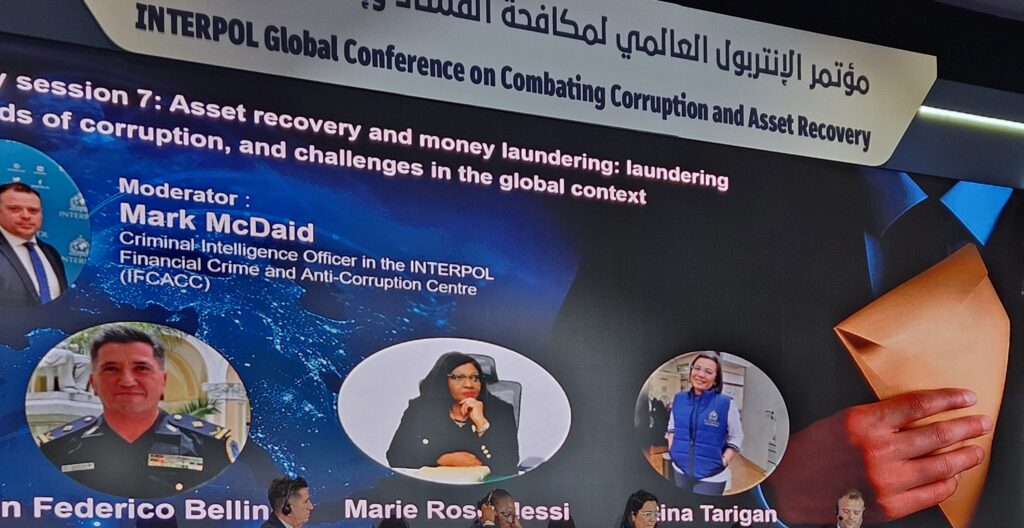
From 9 to 13 November 2025, in the United Arab Emirates, the DRC team, led by the General Manager , took part in the World Conference of the International Criminal Police Organisation – INTERPOL (ICPO-INTERPOL) on combating corruption, money laundering, on the fight against corruption, money laundering, illicit financing, the circulation of corruption proceeds, and emerging international mechanisms for the recovery of criminal assets.
La SRC au cœur de la Conférence mondiale d’Interpol sur la lutte contre la corruption et le recouvrement des avoirs criminels
Presentation by Ms Marie Rose MESSI, General Manager of the DRC, at the ICPO-INTERPOL Global Conference on Combating Corruption and Recovering Criminal Assets in Abu Dhabi, United Arab Emirates (UAE)

The DRC played an active role during the Conference, with the General Manager presenting Cameroon’s experience in tracking, seizing and recovering criminal assets. She outlined the progress made in recent years, particularly in terms of institutional cooperation, judicial procedures, management of confiscated assets and international collaboration. She also highlighted the persistent challenges linked to the complexity of criminal networks, procedural delays and the need to strengthen technical and operational capacities.

2- During the same period, the DRC’s involvement within specialized networks in the dedicated to the investigation and recovery of criminal assets —notably through its participation in the 12th General Assembly of ARINWA (West Africa Network) from 26 to 28 November 2025 in Dakar, and its admission on 20 January 2026 as an observer to ARINCA (Central Africa Network)— reflects a strategic orientation: to integrate operational cooperation channels that enable effective work on cross-border assets

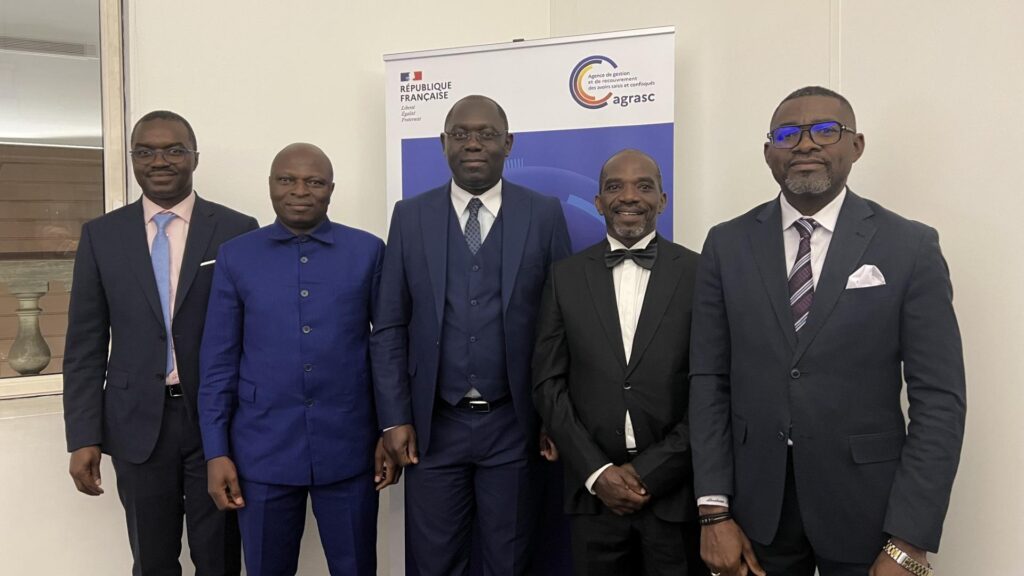
3- From 3 to 5 December 2025, a DRC team led by the General Manager visited the Agency for the Recovery and Management of Seized and Confiscated Assets (AGRASC) in Paris. This mission was part of an effort to benchmark and adopt best practices in the management of confiscated criminal assets.

DRC team at AGRASC

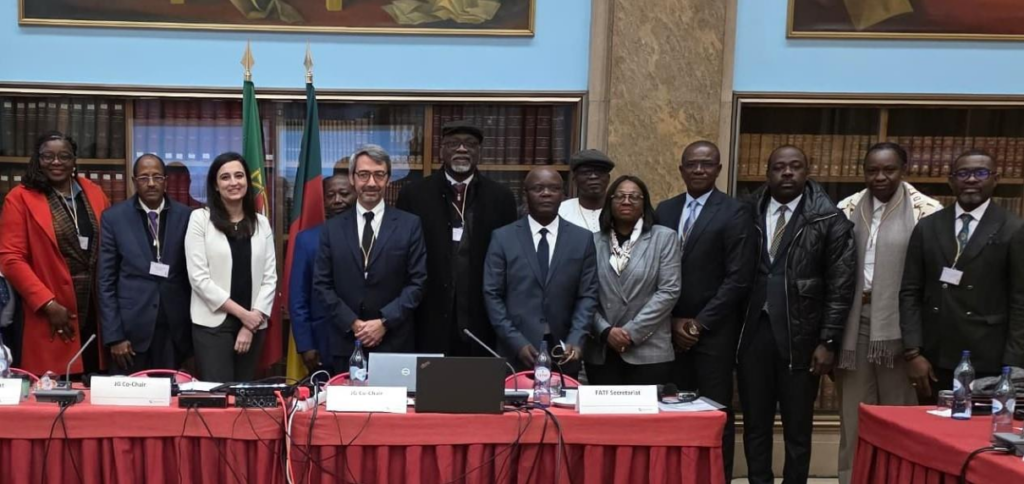
4- From 5 to 13 January 2026, in Lisbon, Portugal, the DRC’s Chief Executive Officer was part of the Cameroonian delegation led by Prof. Mr. SHOUAME Alexandre, Special Advisor to the Division of Economy, Prospective Studies, Budget and Finance of the Prime Minister’s Office, during the face-to-face meeting with experts from the Joint Africa Group of the International Co-operation Review Group (ICRG) of the Financial Action Task Force (FATF). The DRC’s participation in this important meeting heralds the key role that the DRC will play in the fight against money laundering, terrorist financing and the proliferation of weapons of mass destruction, as the body responsible for managing seized and confiscated assets in Cameroon.

Ms ADIABA-NKEMBE Jacqueline, Chair of the Central African Financial Market Supervisory Commission; Mr AMADOU SOULEY, Director of Criminal Affairs and Pardons at the Ministry of Justice; Professor Mr SHOUAME Alexandre, Special Advisor to the Prime Minister's Office, Division of Economy, Forecasting, Budget and Finance; Mr NDE SAMBONE, Director of ANIF, and Ms Marie Rose MESSI, General Manager of DRC, accompanied by the President and members of the ICRG.

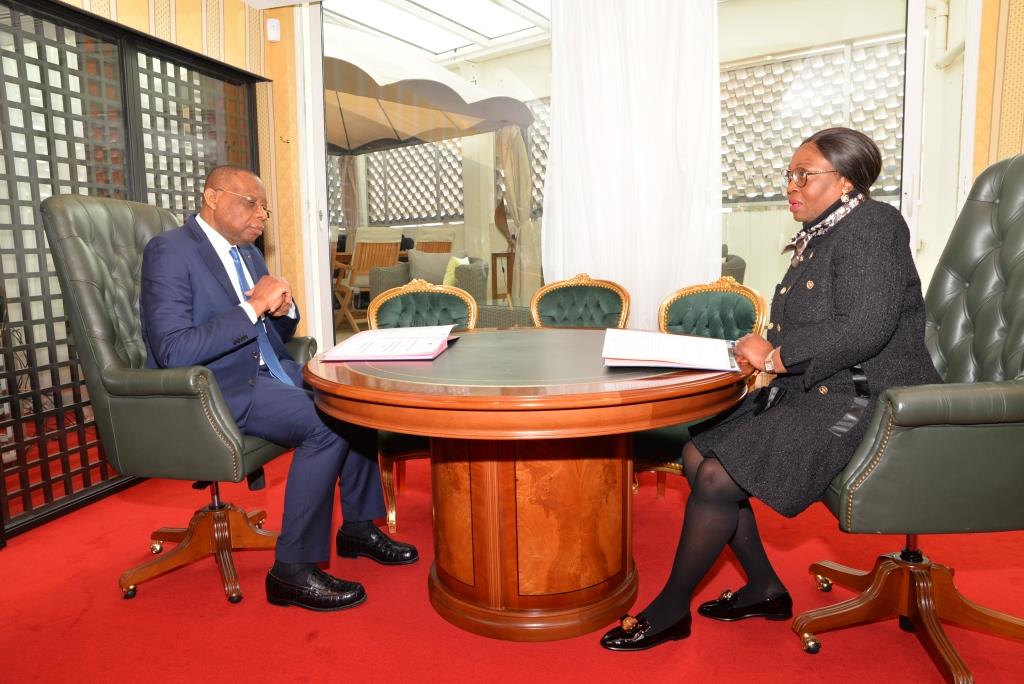
5- On 14 January 2026 in Paris, the Embassy of Cameroon in France, represented by Mr André Magnus EKOUMOU, Ambassador Extraordinary and Plenipotentiary, and the Cameroon Debt Recovery Corporation (DRC), represented by Ms Marie Rose MESSI, General Manager, signed at the Ambassador’s office, an important partnership agreement aimed at facilitating the recovery of Cameroonian state debts in France.

Signing of the partnership agreement between the DRC, represented by Ms Marie Rose MESSI, General Manager, and the Embassy of Cameroon in France, represented by Mr André Magnus EKOUMOU, Ambassador Extraordinary and Plenipotentiary.

Through this intensification of activities, DRC seeks to position itself as a modern, well-equipped and credible instrument, serving a clear ambition: to protect public assets, support the State’s financial authority and embed debt recovery within a framework of results, transparency and accountability. This historic agreement, which has legal effect between the two parties, is valid for a period of three years and is automatically renewable unless expressly terminated by one of either party. It marks an important step in the determination of the public authorities to recover the State’s debts abroad and to track down debtors wherever their assets are located.

The benefits: for the DRC, and above all for the State for the State

For the government, the current dynamic offers several structural benefits: improved resource mobilisation, consolidation of the effectiveness of decisions, enhanced financial credibility and reduction of losses related to old or difficult debts. For DRC, the challenge is to increase the capacity: more secure procedures, expertise strengthened by international cooperation, consolidated operational mechanisms and better coordination between internal and external action. Through this intensification of activities, DRC seeks to project itself as a modern, well-equipped and credible tool, serving a clear ambition: to protect public assets, support the financial authority of the State and ensure that recovery is based on a logic of results, transparency and accountability.

An institution with a long-term outlook

The obvious conclusion is that, since end-2025, this institution has occupied an increasingly strategic position. Effective recovery, international cooperation, protection of public assets abroad, compliance and credibility: these are all areas in which the DRC is naturally exposed, because it works sometimes on powerful interests and major political and economic issues. But beyond the controversies and background noise, what counts is action: the steps taken, the procedures followed, the partnerships formed and the ability to produce results. In this area, the DRC clearly intends to take a long-term approach, with an implicit promise: to make recovery not just a slogan, but a sustainable instrument of public governance.

Facebook
Twitter
LinkedIn
WhatsApp